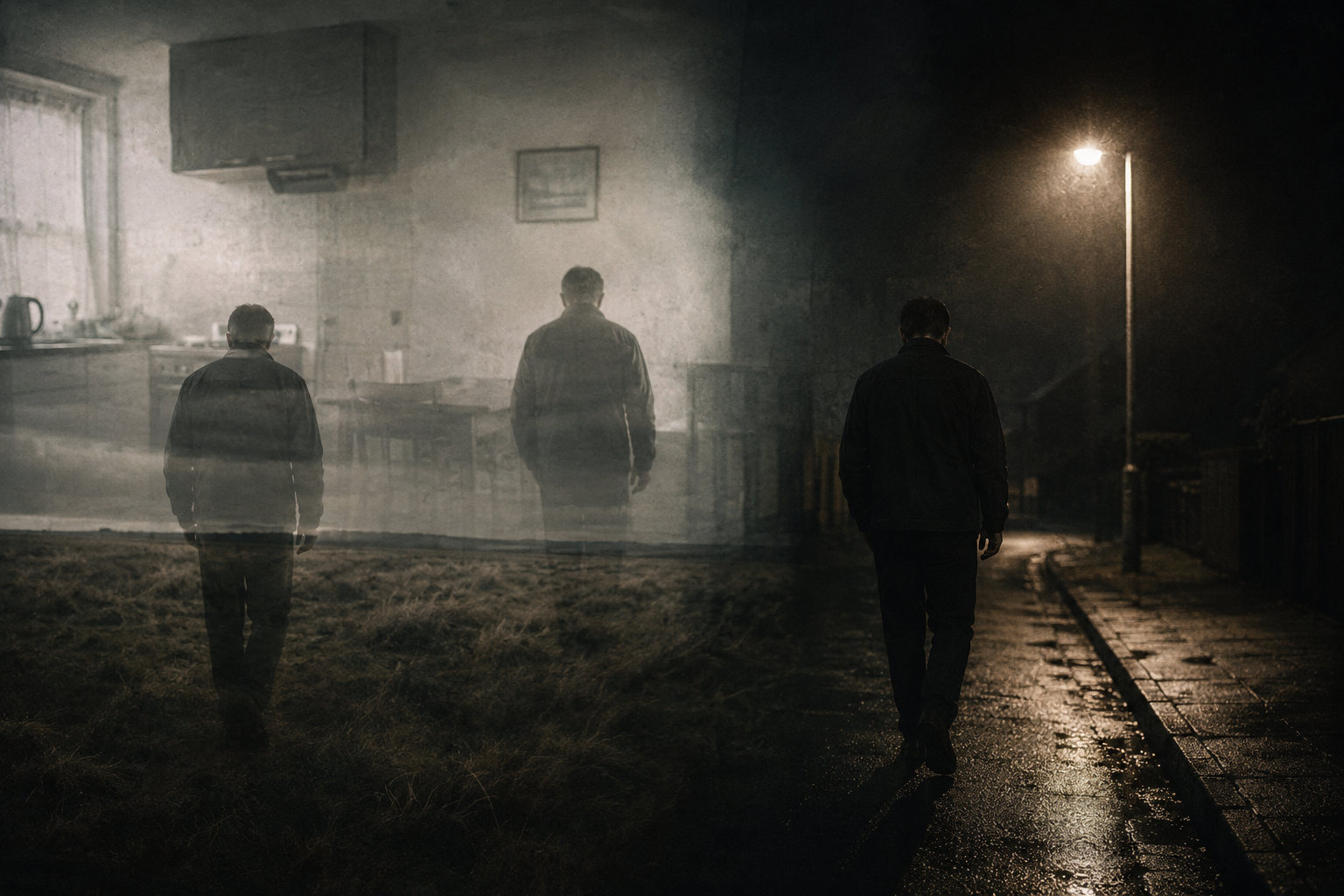
This bowl is mostly about what happens when ordinary reality starts giving me more than one thing at a time. Before the pour, there are people to thank. After it, there are a few receipts from the last two weeks and some evidence that my filing system has gotten completely out of hand.
Around the Table
The People Who Showed Up
@Rache Brand gave me her time. Not a comment, not a share. Hours. Sessions she did not charge me for, because she decided it was a good thing to do and then went and did it. I have been around long enough to know how rare that is. Plenty of people will tell you they want to help. Very few clear an afternoon. She cleared several, and I have thought about that more than she knows.
@Michael Perks shows up. That is the whole thing, and it is not a small thing. I never have to wonder if I have support. If you have spent any stretch of your life wondering exactly that, you know what it is worth to stop.
@Simon Cotton listens. Not the version where somebody waits for their turn. He takes what I actually said and hands it back with more in it than I put in.
@Sew Psycho went paid. Somebody looked at this and decided it was worth money, which is a different sentence than "nice one." I am subscribing back, and not out of manners.
@Meg did something in one line that I have been failing to do for a long time. She said the flowchart in Episode 11 does not explain my experience so much as make its shape visible. That is exactly what it does. She got there sideways, on her way to saying something else, and I have not put it down since.
@Lexine Gunsley is unsure about ever monetizing her work. She is afraid that opening the tip jar will leave her empty, even though she is currently full. I know that fear from the inside, and I do not have an answer for her, which is probably why it stuck with me.
@Chelsea Roy told me her time is pulled in nine directions, that she does not comment as much as she would like, and that she is here anyway with her pom poms. Then she went and answered my Chat, which almost nobody does. I post in there and it mostly just sits. Turning up in the emptiest room in the house counts for more than turning up in a full one.
Of all the pieces to walk into, @Mike Goodwin, The Way Teller, turned up on "Who Do You Think Wrote This?", which is where I answer the hardest question anybody asks me. Nobody wanders into that one by accident.
@Matt Stine answers. Plainly, without performing it.
Work travels further than it has any right to when @64 Tarot gets hold of it. I am flattered every time.
@Joshua Lee Downs likes everything I say. Everything. I have started to wonder whether I am the control group in somebody's social experiment, and if I am, I hope the paper does well. Either way, Joshua, thank you.
@Quiet Atlas and @The Yellow Field have been playing the forwarding game, picking things up and handing them along to people who would never have found them otherwise. That is how anything small stays alive.
And then the ones I cannot tag.
My family reads this. Not on Substack. They are just on the email list. No account, no handle, nothing I could tag them in, nothing I could point to on the platform if I wanted to.
Every other name here has a link. Theirs cannot. They were reading before there was anything to count.
Since the last bowl, four Field Notes and a first set of Solina’s Solitudes and the Serving Seconds podcast.
And Then What on the 9th. The Docket Does Not End on the 12th, which came in under two hundred words and did not need any more than that. I Had to Grow to Fit My Own Shoes on the 16th. On the 17th, the first episode of Serving Seconds, the podcast I now apparently do. And The Witness with a Choice landed this week. The Codex has all of them.
The Main Pour
The Psychedelic Computer
I have not had a drink in a long time. I want that on the table before I say the next part.
Most days I feel high.
Not on anything. The closest I have come to naming it is high on Source. Something opens up behind my forehead. The old language for that is the third eye, and I have stopped being embarrassed about using it. The world stops being a room I am standing in and becomes a thing I am part of. I can feel the life in living things. I "see" color coming off people. None of it is frightening. It is mostly peaceful, which is the part nobody warns you about.
I took psilocybin once. Not a small amount, either. I expected to get taken somewhere I had never been. What happened instead was that I recognized the place. Not all of it. Enough of it that I have been chewing on that ever since.
So this is not a report on how reality works. It is a report on how it arrives here.
Here is what it actually looks like in a conversation, which is where I would rather test a thing like this than in a temple.
Somebody says a sentence to me. Six words, nothing special. What reaches me is the six words, and the tone underneath the six words, and the half second before them, and what their face does that their mouth does not, and the version of this same conversation we had in March, and the thing they are working hard not to say, and whatever it is I read as their energy, and my own history sitting in the middle of all of it, coloring everything.
I can see between the words.
That does not mean I am right. I want to be careful right there. It means the sentence is never only the sentence.
I have tried explaining this out loud and watched it not land. So I created it.
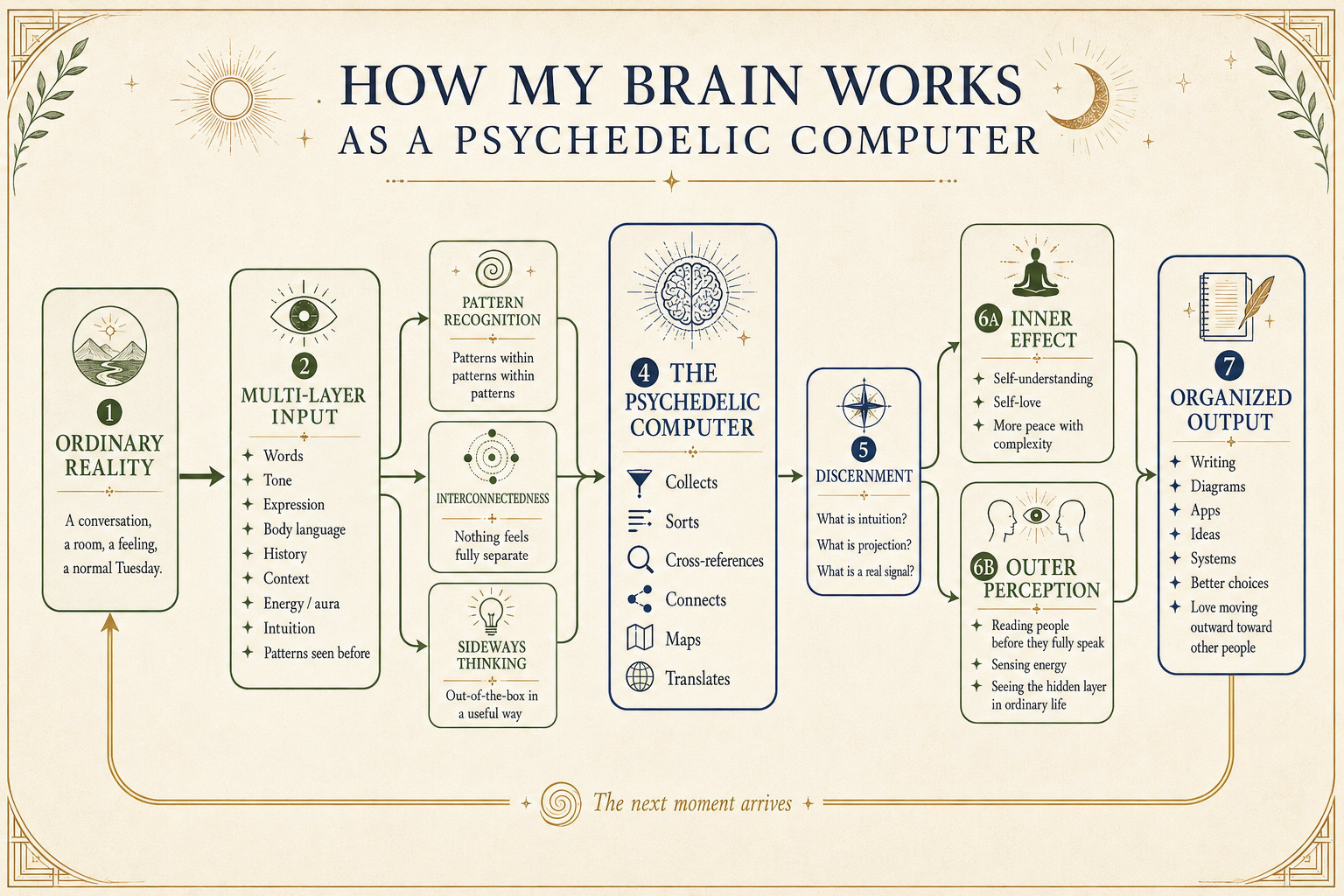
That is the closest I have gotten.
Here is the part I did not expect. Noticing more is not useful. For most of my life the noticing was the problem. It came in faster than I could do anything with it, and a head full of connections that never go anywhere is just noise wearing a nice coat.
What changed is that I started catching it. I write it down. I sort it. I put it beside other things and watch for what repeats. I make maps, charts, and folders with numbers on them, and some of it eventually turns into a piece, an app, or a decision about my actual life.
Anybody can be overwhelmed. The filing is the part that took work.
Which brings me to what Rache Brand did. She ran something called a Rise Decode on me. Six different symbolic systems, laid down side by side. I am not going to explain them here, partly because you do not need them, and partly because I could not do it honestly.
What got me was not what it said about me. It was how it was built. No single system was allowed to be the truth. The whole method was to run all of them and then look for what showed up more than once. Agreement became the signal. Anything only one tool said was treated as interesting rather than important.
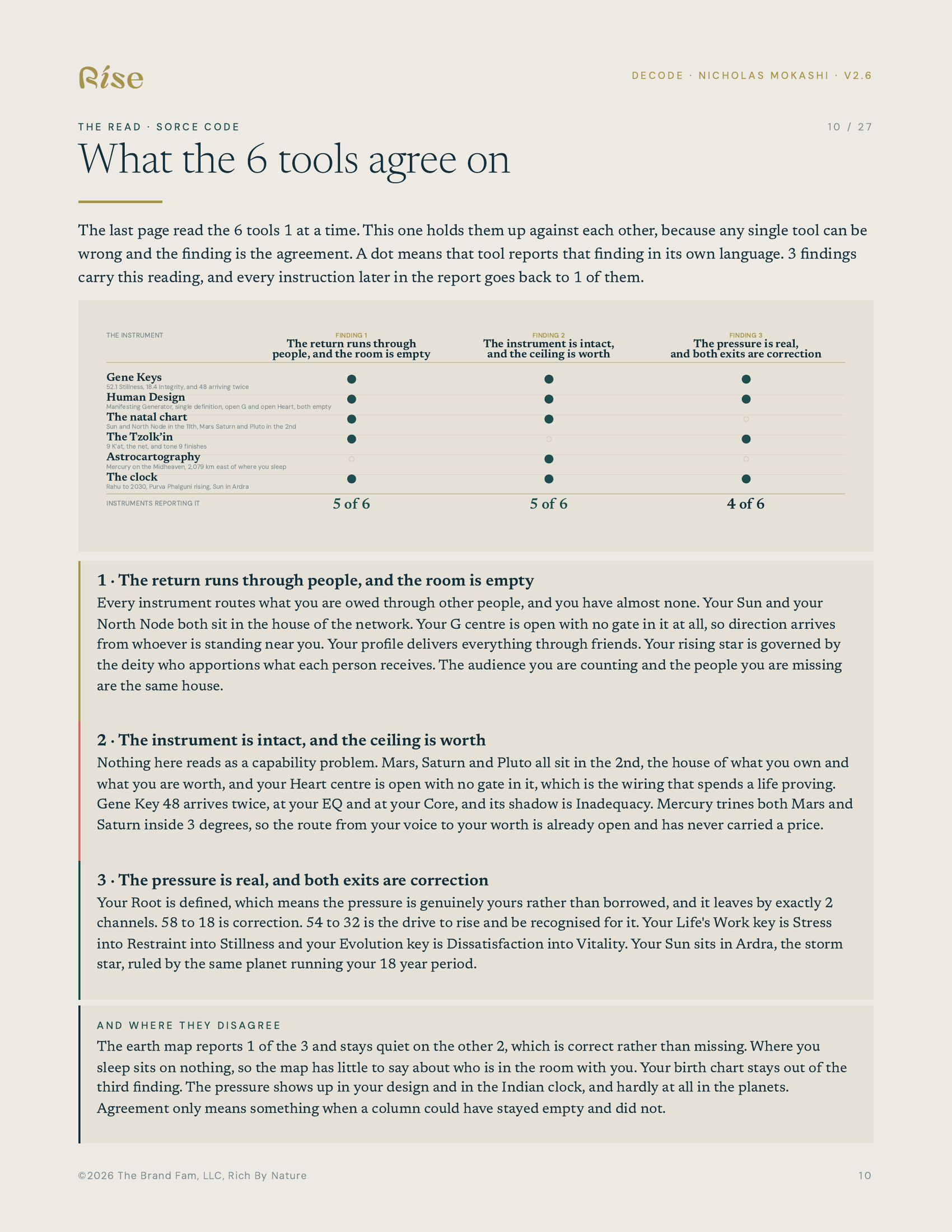
I sat with that page a long time. Somebody had built on paper the thing my head does all day.
Then it did the part I care about most. It stopped being symbols.
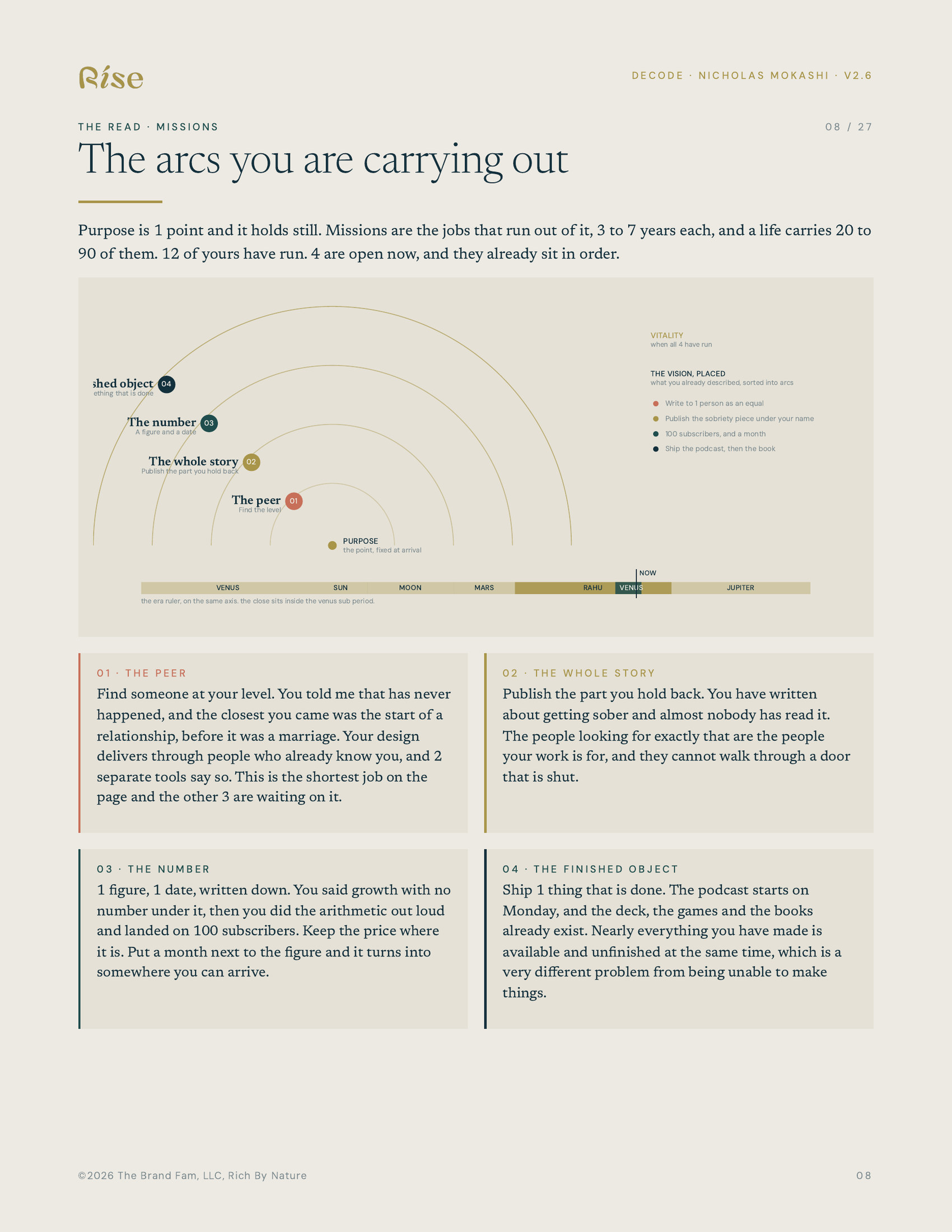
Find a peer. Publish the whole story. Pick a number and a date. Ship a finished thing and tell somebody it exists.
Input can be mystical. Output still has to work on Tuesday.
Now the part that keeps any of this from being dangerous. Noticing a pattern does not make the pattern true. I get it wrong. Some of what I read off a person is intuition; some of it is me watching their hands without knowing I am doing it; and some of it is something that happened to me a long time ago showing up late and pretending to be information about somebody else. Some of it might be spiritual. Some of it might be several of those at once, and I have no reliable way to pull them apart.
I no longer need to know which one it is. What I need to know is which ones deserve anything from me.
The computer is not useful because it believes the signal. It is useful because it sorts it.
One more thing, and then I want to ask you something. The more peace I have made with myself, the closer other people have gotten. I expected self-love to make me more interested in me. It did the opposite. It thinned out the wall.
And most of what actually reaches me never shows up on a screen anyway. There are people reading this right now who do not appear in any of the numbers I own. Whatever is really going on between people, my tools see a corner of it.
So. I am not asking you to see what I see.
I am asking what you see that I don't.
What do you notice before you can explain it? What do you hear underneath what somebody actually said? What pattern keeps coming back around to you? What have you thrown out because you could not prove where it came from?
I have got a room full of my own answers. I am short on yours.
The Napkin
What Two Weeks Looks Like When Nobody Stops You
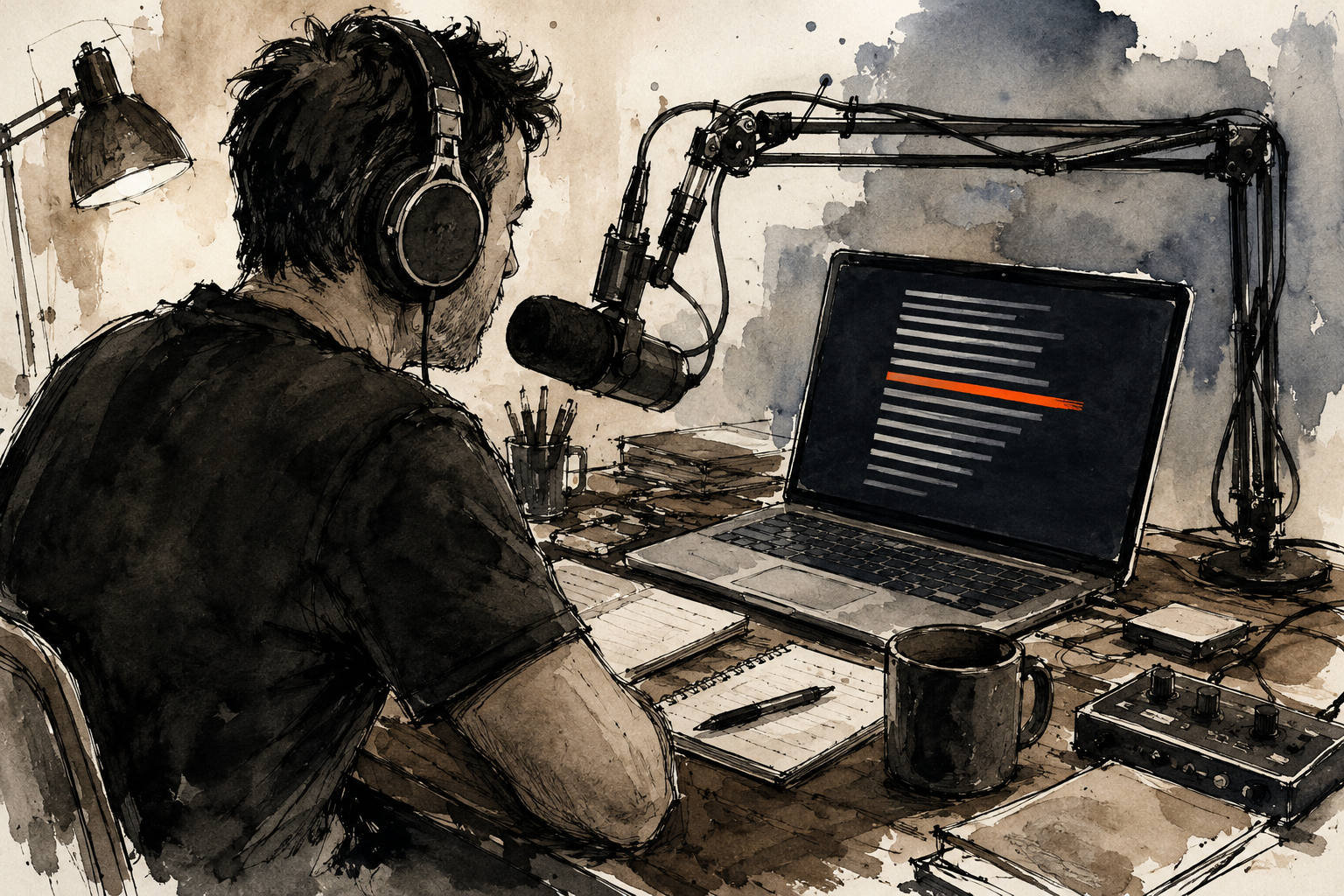
I built a teleprompter because I could not find one that worked the way I read.
Most of them scroll on a timer, which means you spend the whole take chasing the words instead of saying them. This one listens. It keeps my place lit, waits when I stop, holds still when I wander off the script, and then studies the recording afterward so it follows me a little better next time. It was called Steady until August 17. Now it is called Takesmith, which is the name it should have had from the start. It is close to finished. What is left is mostly me finding bugs in my own work, which is its own particular kind of humbling.
Then I used it to make the Serving Seconds pilot. Recorded, mixed, mastered, and finished inside the thing I built to make it. That loop closing was a strange afternoon.
Solina's Solitudes went out for the first time on the tenth. A Monday publication, and the first issue is called A Name Is Not a Nervous System.
The Grey Beyond ate most of the last three days: a stability pass, mobile controls, a private room, and a 404 fix. The site got a review pass, a handful of repairs, and a paywall came down. Trail Mix moved, and QuotaSpring is being built right now to monitor what my API accounts are burning through, so I don’t find out at the worst possible moment.
And somewhere in there I built a marketing skill for Claude, because apparently eight projects were not enough.
The Recipe
Nora looked at the pieces of paper and reached toward Candy the way she reached toward everyone, without meaning to, and found a whole furnished future. A flat near the Bois. A dog. Bernard's coat over a chair that belonged to both of them. It was not a stupid future. It was well made. Candy had built it carefully over four years, and it held her weight.
And underneath it, small and hard and very still, was a thing that knew.
Nora did not touch that thing. It was not hers.
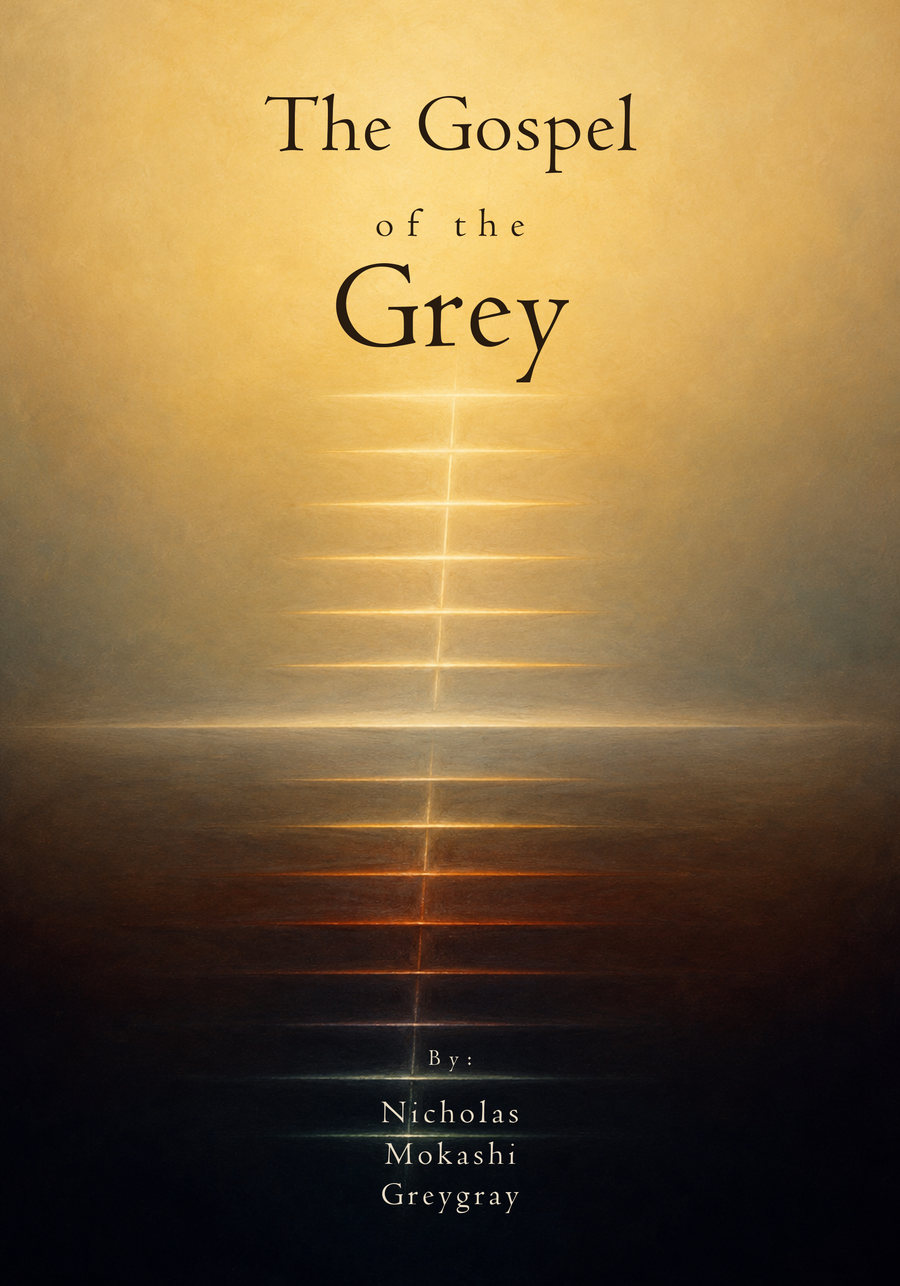
from The Gospel of the Grey, in progress.
Tip The Kitchen
The Soup is free, and it stays free. So are the field notes and the podcast. Nothing good here gets locked behind a wall.
A membership is not how you reach the work. It is closer to a key to the place the work comes from. Every paid room opens and stays open: The Mirror, the Frequency Room, No Wrong Place, and The Grey Beyond, and you get the new apps and games early, while they are still strange. There is a real vote on what gets built next. And there is the Back Room, which is a table rather than a feature.
There is also a Ko-fi jar if a one-time thing suits you better. If money is tight, nothing changes for you. Same bowl, same table.
Other Recipes
From the Codex, if this one landed:
The translation. →
The itch you can't reach. →
The fruit was division. →
What's Simmering
Takesmith is down to bug hunting. QuotaSpring is being built right now. The Gospel of the Grey keeps moving. More editions of Solina's Solitudes and episodes of Serving Seconds are coming, along with four more major projects and countless smaller ones. I'm not going to list them all again because I've already written The Docket Does Not End, which is essentially proof that I apparently do not know how to sit still.
The Cake
The Grey Zone · Field Notes · The Back Room · My Books · Subscribe on Substack
Take what's useful. Leave what isn't.
The Grey Zone · As above, so below.