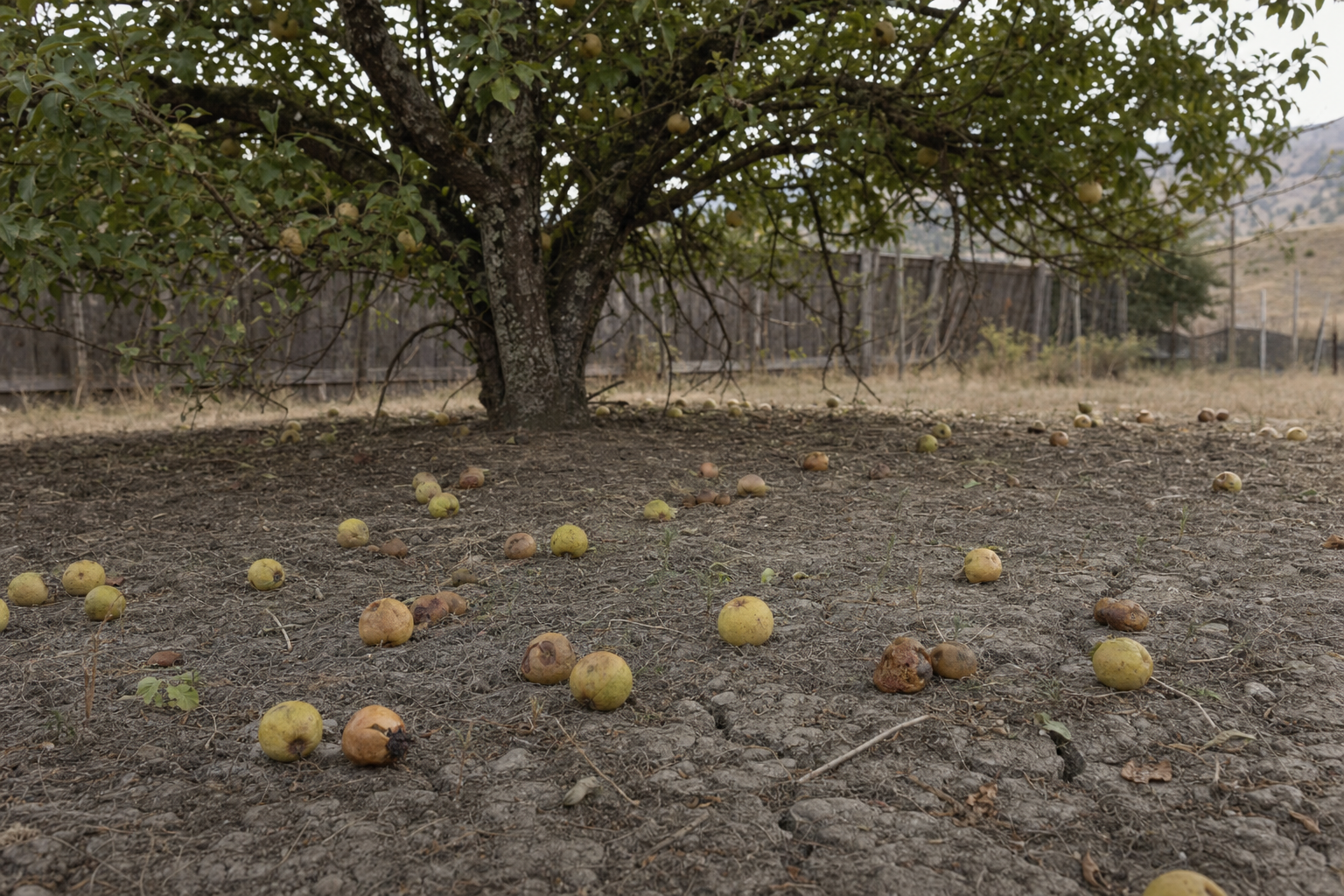
Most modern Christianity teaches the story of Adam and Eve like a courtroom drama.
Humanity disobeyed.
God became angry.
Sin entered the world.
Now everybody suffers until salvation arrives.
But the Gnostics saw something entirely different hidden underneath the symbols.
To them, Genesis was not merely history.
It was psychology.
Cosmology.
Consciousness.
A map of what it feels like to wake up trapped inside matter while somehow remembering that you came from somewhere beyond it.
And once you begin reading the story through that lens, the entire thing changes.
The serpent stops looking purely evil.
Knowledge stops looking like the problem.
The garden stops looking like paradise.
And earth itself begins to resemble something much stranger.
Possibly even hell.
Not hell as eternal punishment with fire and demons.
Not the cartoon version.
Hell as separation.
Hell as fragmentation.
Hell as forgetting what you are.
The Gnostics believed that above this material reality existed the Fullness, often called the Pleroma. A realm of wholeness, unity, divine intelligence, and living light. Not “heaven” in the simplistic modern sense, but a state of undivided being where consciousness existed in harmony with Source itself.
In many Gnostic texts, especially texts like The Secret Book of John, the material world was not directly created by the highest God at all. Instead, it emerged through a fracture in consciousness.
Sophia, whose name means Wisdom, desired to create independently from the divine balance. In her longing and imbalance, something distorted came into existence: a lesser creator-being called the Demiurge.
The Demiurge is one of the strangest figures in all religious thought because he is not exactly Satan.
He is ignorance with power.
He believes he is the highest god because he cannot perceive anything above himself. And from this blindness, he creates the material world. Imperfect matter. Division. Limitation. Density. Time. Death.
The Gnostics often described him as arrogant, jealous, and obsessed with control. In some texts he even declares:
“I am God and there is no other God beside me.”
Which is fascinating because the statement sounds less like ultimate wisdom and more like ego.
Like a being trapped inside its own certainty.
The physical world, then, becomes something like a cosmic machine of forgetting.
Not fully evil.
But distorted.
Beautiful and painful at the same time.
And honestly, if you look around long enough, it starts making uncomfortable sense.
Because this world contains astonishing beauty.
Music.
Love.
Sunsets.
Laughter.
Art.
The feeling of being deeply understood.
But it also contains endless contradiction.
Bodies decay.
People betray each other.
Children suffer.
Addiction exists.
War repeats itself endlessly.
Human beings destroy themselves while claiming to seek happiness.
We crave things that poison us.
We run from silence.
We fear death constantly while pretending we do not.
We feel spiritually homesick without knowing for where.
The Gnostics would say:
Of course.
You are divided.
The human being is simultaneously divine spark and biological animal.
And this is where Adam and Eve becomes incredibly interesting.
Because in the Gnostic interpretation, the serpent is sometimes viewed not as the villain, but as the awakener.
The one who says:
Wake up.
The fruit is not merely “sin.”
The fruit is awareness.
Duality.
Self-consciousness.
The splitting of reality into opposites.
Before eating, Adam and Eve exist in unconscious unity.
Afterward, they suddenly perceive separation.
Good and evil.
Self and other.
Body and spirit.
Nakedness and shame.
Life and death.
The first emotion born from the fruit is not violence.
It is shame.
That detail matters.
Because shame only appears when consciousness fractures against itself.
The body suddenly becomes suspicious.
Desire becomes dangerous.
Instinct becomes something to suppress.
Nature becomes “lower.”
The human being becomes internally divided.
And that division has echoed through civilization ever since.
This is why human beings seem to live in permanent tension.
One side of us wants transcendence.
Another side wants comfort.
One side wants peace.
Another wants stimulation.
One side seeks truth.
Another seeks survival.
One side meditates.
Another doomscrolls at 2 AM eating sugar and dissociating from existence.
Both live inside the same nervous system.
The war in heaven becomes the war inside the self.
And honestly, maybe this is why modern people feel exhausted all the time.
Because we are trying to kill half of ourselves in order to feel pure.
Religions often tried to destroy the body.
Modern culture often tries to destroy the soul.
Neither approach works.
The rejected side always returns.
Carl Jung understood this psychologically when he spoke about the shadow. What you suppress does not disappear. It waits underground and grows teeth.
The Gnostics understood it spiritually.
The prison was never merely “out there.”
The prison is identification.
Identification with only the body.
Only the ego.
Only the role.
Only the fear.
Only the mask.
This is why so many mystical traditions eventually arrive at similar conclusions through completely different languages.
Buddhism speaks about attachment and illusion.
Taoism speaks about balance and polarity.
Hermetic teachings speak about correspondence and vibration.
Jungian psychology speaks about integration.
The Gnostics spoke about remembering.
Not learning.
Remembering.
Because somewhere underneath all the conditioning, all the fear, all the noise, all the identities, they believed there remained a divine spark buried within the human being.
A fragment of the original light.
And salvation was not obedience.
It was awakening.
Not “becoming worthy.”
Not “earning love.”
Awakening to what you already are beneath the fragmentation.
This changes the meaning of “everlasting life” completely.
Most people imagine everlasting life as endless continuation of the personality.
But maybe that is not what the ancient mystics meant at all.
Maybe everlasting life means reconnecting with the part of consciousness untouched by death in the first place.
Because the ego fears death.
The body fears death.
Identity fears death.
But awareness itself is stranger than that.
There are moments, even sober ones, where human beings briefly touch something beyond ordinary identity.
Deep meditation.
Near-death experiences.
Profound love.
Creative flow.
Moments of complete presence.
States where time temporarily dissolves.
And during those moments, people often report the same strange realization:
“I was never as separate as I thought.”
Not because individuality disappears completely.
But because the boundaries soften.
This is why I no longer think enlightenment means escaping humanity.
And I no longer think the answer is total indulgence either.
Both extremes miss the point.
The hyper-material person becomes spiritually starved.
The hyper-spiritual person can become detached from grounded reality entirely.
The middle path is not weakness.
The Grey Zone is not indecision.
It is integration.
To become whole enough that the internal war begins calming down.
To stop demanding that instinct and spirit destroy each other.
To stop worshipping certainty.
To stop pretending we are only flesh or only light.
We are somehow both.
Sacred and animal.
Infinite and temporary.
Cosmic and absurd.
Consciousness wearing biology.
And maybe earth feels like hell sometimes precisely because it is the place where opposites collide hardest.
A place where spirit experiences limitation.
A place where eternity experiences time.
A place where unity experiences separation.
But maybe that is also why growth happens here.
Because pressure creates awareness.
The soul does not awaken in comfort nearly as often as it awakens in contradiction.
This does not mean suffering is “good.”
It means suffering forces questions.
Who am I beneath my cravings?
Who am I beneath fear?
Who am I when my identity collapses?
What remains when distraction stops working?
The Gnostics believed most people remain asleep inside the system completely identified with the surface self.
And honestly, modern life almost seems engineered to deepen that sleep.
Infinite scrolling.
Consumer identity.
Outrage addiction.
Fear cycles.
Constant stimulation.
Noise every waking second.
Because silence is dangerous to the system.
Silence allows remembrance.
And remembrance changes people.
Not overnight.
Not magically.
But slowly.
The war inside begins softening.
The ego becomes less tyrannical.
Fear loosens slightly.
Compulsion weakens.
Presence deepens.
You stop trying so hard to become.
And begin remembering.
Not perfection.
Not purity.
Wholeness.
Maybe that was the real exile from Eden.
Not punishment from God.
Division from ourselves.
And maybe the path home is not found through blind belief or total rejection of the world, but through conscious integration of both sides of our existence.
The body is not the enemy.
The ego is not the enemy.
Matter is not the enemy.
Unconsciousness is.
Because a prison only remains a prison while you believe it is the entirety of reality.
And perhaps awakening begins the moment the divine spark inside you whispers:
There is more than this.