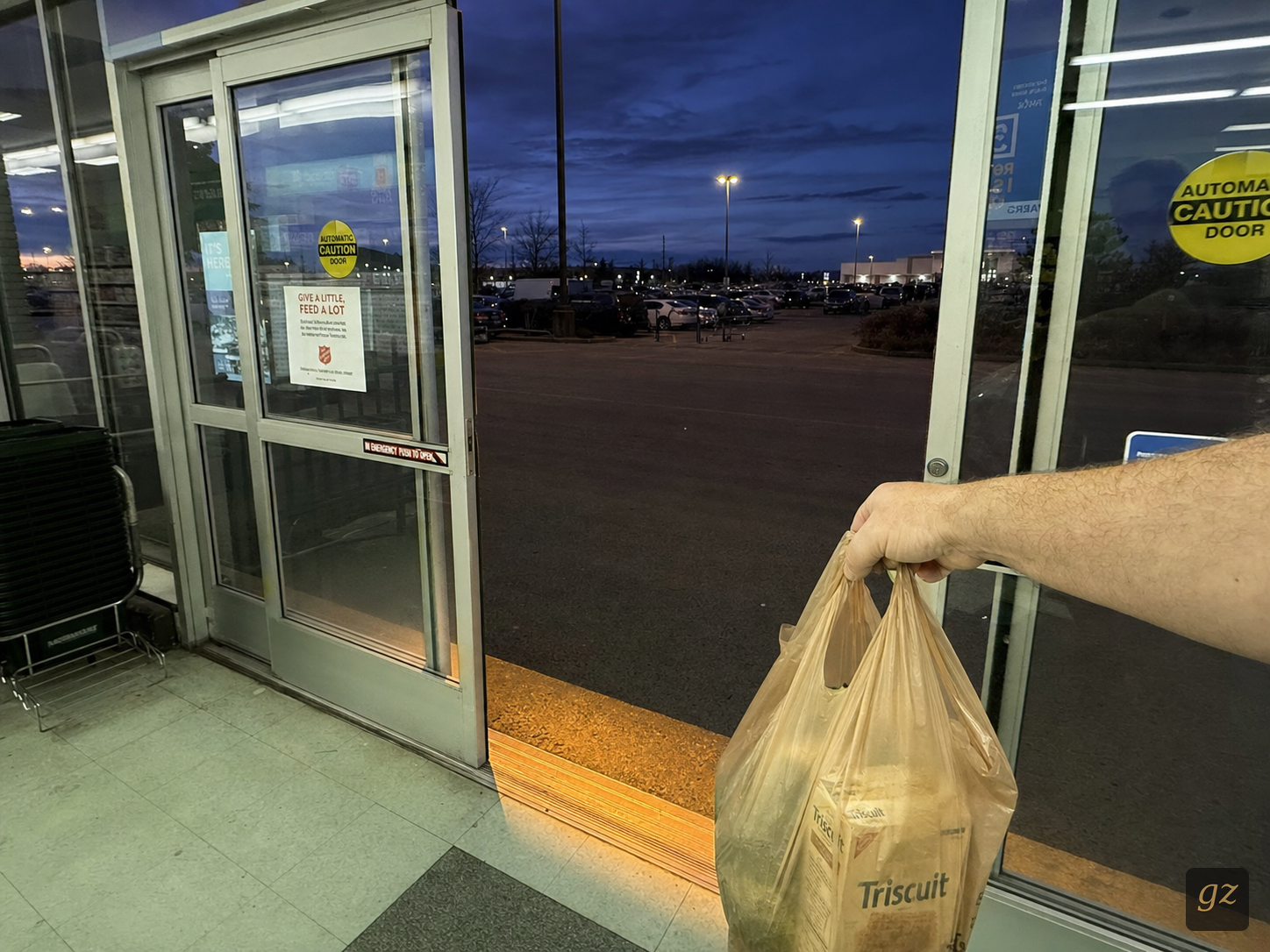
There is a thing that happens in the bread aisle of Partially Eaten Foods at about 4:30 on a Tuesday afternoon.
You have been on since seven. The stockroom is half sorted. There is a spill near the deli that somebody said they would handle an hour ago and hasn't. Your back is doing its thing. You are not thinking about God or practice or the luminous ground of being. You are thinking about whether the whole-grain shelf is faced correctly and whether the guy from receiving remembered to pull the oldest dates forward. You are thinking about your feet.
And then somebody's grandmother asks you where the rye bread is, and she is the fourth person to ask this today because the rye has been in the wrong spot for a week and nobody has fixed the sign, and you walk her there. Not because it is your job, exactly, but because it is faster than explaining. And she says, quietly, thank you, honey, and something small happens in the chest. Not big. Not the thing the retreat brochure is selling. Something small and warm and real, and gone before you can name it.
That is The Errand.
What The Errand is.
The Errand is not the big practice. It is not the retreat or the intensive or the breathwork weekend or the shamanic ceremony with the sliding-scale fee. The Errand is the small obligatory thing that turns out, if you are paying attention, to be the actual place where something moves.
The Errand is the grocery run at 6 PM when you are already tired. It is the call you make to the friend who is not doing well, the one that takes thirty minutes and goes nowhere in particular and matters anyway. It is the walk to the mailbox. The cup of coffee you make without being asked because someone in the house looks like they need one. It is small, repeated, often unacknowledged, and it is. And this is what I keep arriving at. Frequently more alive than the designated spiritual container.
The container and the contact.
Here is the distinction.
The designated spiritual container is the hour you block on the calendar. The meditation cushion. The Sunday practice. The thing you do with the correct posture and the correct intention, aware that you are now Doing The Practice. The container is real. I am not saying the container is nothing. The container is the scaffolding that gets you into position.
The Errand is what happens in the gaps between containers, when you are not thinking of yourself as a spiritual person at all, when you are just trying to get the bread aisle faced correctly.
The container holds the intention. The Errand holds the contact.
And contact is what most practice is trying to produce. Contact with something that is not yourself, something that doesn't care how correctly you are breathing. The grandmother in the bread aisle does not care about your practice. She cares about the rye. And in caring about her actual problem, instead of your own illumination, something slips. Some small amount of the performance falls away. You are just a person helping another person find bread.
That is close to the thing the mystics spent whole books trying to describe.
What the old books say.
I have read a lot of those books. The common thread. The one that runs through the anonymous medieval monk and the Stoic emperor and the Russian peasant who walked across a frozen country praying. Is that the practice cannot live only in the container. The container is the on-ramp. The actual road is everything else.
Brother Lawrence was a cook. He cooked. He cleaned pots. He did not retreat to a cell to find God. Or if he did, he wrote that the finding was no better there than at the stove. The stove is where the contact happened, because the stove was real, and the soup was real, and the body's attention was fully on the soup.
I think about this a lot, working the kind of work I have worked. The fish counter, the stockroom, the overnight shift, the loading dock. Nobody is waiting at these places with a velvet cushion. Nobody is burning incense. The fluorescence is doing what fluorescence does. And yet. There are moments, specific ones. A conversation cut short by a truck backing up, the small satisfaction of a well-sorted pallet, the ten seconds of genuine eye contact with somebody having a visibly bad day. That land with a weight that the retreat didn't.
The retreat sells the idea of transformation. The Errand delivers it, occasionally, without announcement, in a bread aisle.
What The Errand is not.
It is not a consolation prize. It is not what you say when you can't afford the retreat. The Errand is not inferior practice. If anything, it is purer, because it does not require you to want it. The grandmother does not need you to be seeking. She just needs you to know where the rye is. The task asks nothing from your spiritual ambitions.
It is not always meaningful. Sometimes the bread aisle is just the bread aisle. Sometimes you walk the grandmother to the rye and nothing happens and you go back to facing the whole-grain shelf and that's the whole story. This is important. Not every errand is The Errand. The Errand is what it is when you are present enough to receive it, and presence is not always available. This is not a failure. The errand happened. You were there. That's sufficient.
The search underneath the search.
The book I keep working on. Spiritual Homesickness (forthcoming). Starts from a question: what is the addict actually searching for? The drug isn't the answer. The drug is the shortcut to a feeling. The feeling is contact. Connection. The brief and total absence of the gap between yourself and something larger than yourself.
The drug is a bad answer to a real question. So, frequently, is the retreat. Both are trying to produce the same thing. The hit, the arrival, the brief conviction that you are not separate. Through concentration and force.
The Errand offers the same thing through inattention. Because you weren't trying to get there, the gate was open.
The container holds the intention. The Errand holds the contact. Most practice is trying to produce contact. Most of the contact happens somewhere else.
Take what's useful. Leave what isn't. Sometimes useful is a well-faced shelf and an old woman who needed to find the bread.
This field note draws on territory from Spiritual Homesickness (forthcoming) and the Blue-Collar Mystic trilogy. Both are on the My Books page. The companion notes are The Itch You Can't Reach and The Real Ones.