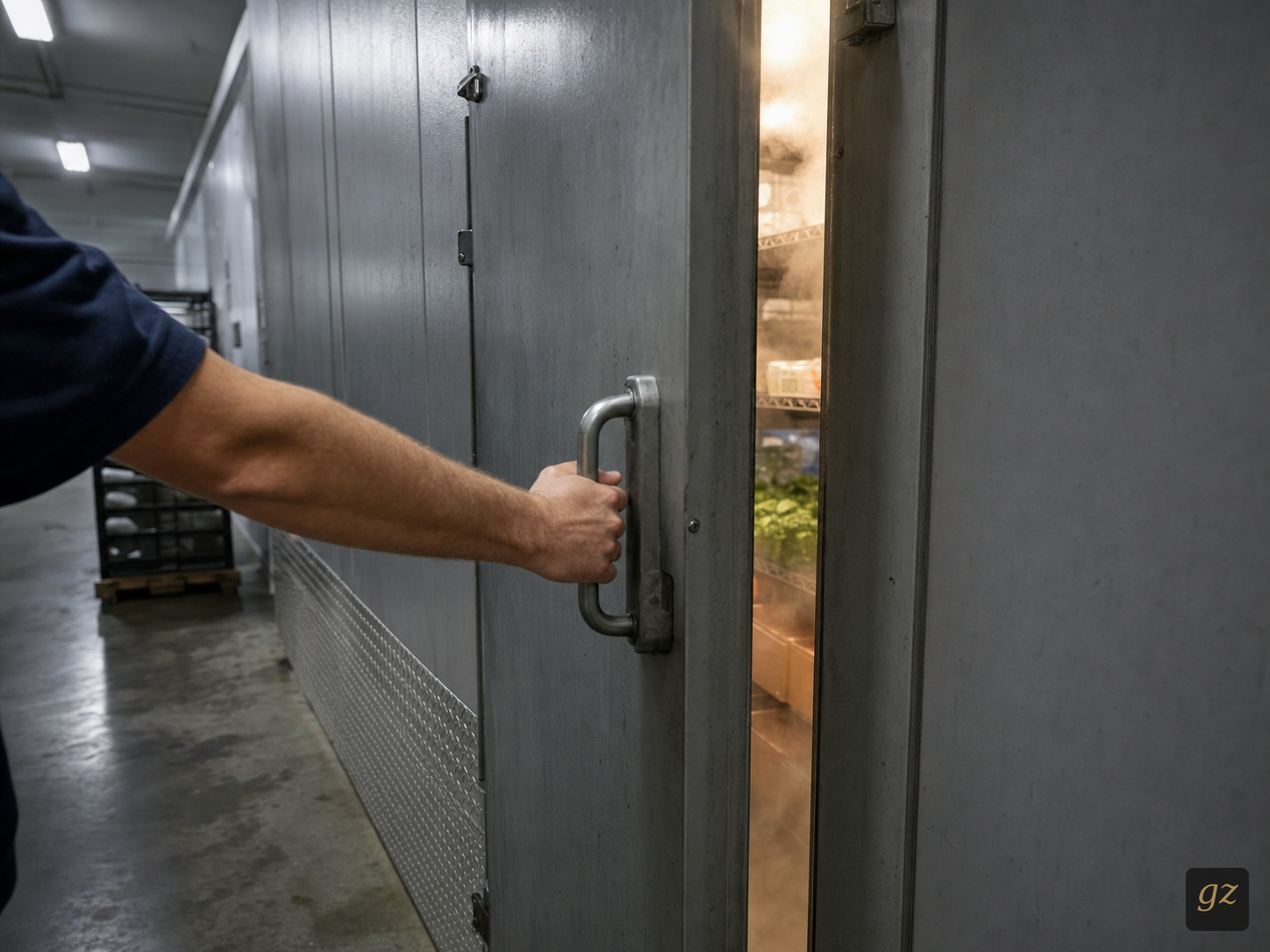
I have stood in the walk-in cooler at Partially Eaten Foods with the whole plan mapped out in my head. The conversation I was going to have with the shift lead. The exact words. The way I would hand over the apron without drama. I had timed it. I had written a version of it in the notes app on my phone while pretending to check the halibut inventory.
I walked back out onto the floor, started breaking down a salmon, and did not say a word.
This happened more than once. In more than one building. In more than one version of my life.
I am not ashamed of it. I am naming it because it has a name. Naming things correctly is most of the work.
The Almost.
The Almost is not failure. Failure requires a real attempt. The Almost is the step that stops just before the attempt. It is the speech that gets fully written and never delivered. It is the draft that sits in the folder for eight months. It is the resignation typed and not sent. It is the conversation you have with yourself at two in the morning that never makes it to the person who needs to hear it.
The Almost is not indecision, either. Indecision does not know what it wants. The Almost knows exactly what it wants. That is the whole problem. You cannot almost a thing you have no vision of. The Almost is specific. It has a shape. It is the thing you can describe in detail to a stranger and then explain, also in detail, why today is not quite the day.
The Almost is not procrastination. Procrastination is about discomfort with the task. The Almost is about discomfort with what happens after the task succeeds.
What it feels like from the inside.
It feels like being reasonable. That is the tell.
Standing in the cooler with the plan fully formed, I felt reasonable. I was thinking about the right moment. I was being strategic. I was not being reckless. There were bills. There was the schedule. There was the guy on the afternoon shift who would get stuck with my section if I walked out wrong. All of this is true. All of it was also cover.
The Almost has very good reasons. It always does. It will quote your own good sense back at you. It will invoke your responsibilities. It will point to your track record of things that did not work out and ask, carefully, whether you have really thought this through. It is patient. It has time.
What I could not see until I was outside it: the reasons were not wrong. They were just being used wrong. A good reason to wait one week is a real thing. The same reason applied again the following week and the week after is no longer a reason. It is a residence. You have moved into the Almost and started hanging pictures.
The cost.
Nobody around you can see the Almost clearly. From the outside it looks like steadiness. You show up. You do the work. You are reliable. The fish get cut. The section stays clean. Fine, by every visible measure.
The cost is interior. It is the slow friction of knowing what the next thing is and not doing it. Small at first. After a while it compounds. The longer you stay in the Almost, the more evidence you accumulate that you are the kind of person who stays there. That evidence is false, but it accrues. And at some point it starts to feel like fact.
That is when the Almost gets dangerous. Not when it delays one decision. When it becomes the way you think about yourself.
You can sabotage your way out of a lot of things. You cannot sabotage your way out of the thing you were born to do. You can delay it. You can circle it. You can get very good at almost. But it will still be there. And you will have spent real time, real energy, real life building a very comfortable room inside a state that was only ever meant to be a doorway.
What breaks it.
Not inspiration. Inspiration is the thing the Almost uses to keep you interested while you wait. The next idea is just around the corner. The right moment is almost here. Keep building.
Not courage, exactly, either. Not the big dramatic version of it. That framing makes the Almost sound like a flaw to be overcome by sheer nerve, and it is not that. Some of the people I most respect have been inside the Almost for significant stretches. It is not a moral failing. It is a pattern.
What I have found, personally, is that the Almost breaks on contact with a specific and uncomfortable next action. Not a plan. Not a vision. One thing, specific enough to feel slightly too real. The conversation, not "having a hard conversation someday." The draft sent to one person, not "sharing my work eventually." The walk out to the car with the apron in your hand.
The Almost cannot survive contact with the concrete. It lives in the space between deciding and doing. You get out of it by collapsing that space, even once, even small.
The parking lot after.
I did eventually have the conversation with the shift lead. It was not dramatic. It was four sentences and a handshake and then I was in the parking lot with my phone in my pocket and the specific weight of having said the actual thing instead of the almost-thing.
I want to be careful not to make that sound bigger than it was. It was one conversation. The next thing was still uncertain. The bills were still real. What was different was simpler than that: I was no longer inside the Almost on that particular thing. The room was gone. I was in the regular cold with my regular life in front of me, which was uncomfortable and also just true.
That is the only thing the Almost was protecting me from. Not failure. Not the hard outcome. Just the truth of where I actually was.
Turns out I could stand there. Turns out most people can, once they stop working so hard to avoid it.
Take what's useful. Leave what isn't. family.
— Greygray
This field note draws from Blue-Collar Mystic, Vol. Three: Beyond the Punch Clock, specifically the entry on playing small as the real danger. Listed on the My Books page.